
What is audio enhancement and what is it for?
Audio enhancement is the set of signal-processing steps that reduce unwanted sound in a recording and bring the speech forward. The aim is not to make the recording "sound nice" but to help the listener understand the speech that is already in it more accurately.
Typical uses include meeting or interview recordings, phone call recordings, the audio track of CCTV or dashcam footage, voice messages and witness statement recordings. The processed recording is used for listening, transcription and, where needed, an expert opinion report.
Main service page for this topic: digital evidence examination
Which processing steps are applied?
Every recording is different; the processing chain is decided by looking at the recording itself. Common steps are:
- Analysis: The spectrogram is used to identify the type of noise (constant hum, mains buzz, impulse noise, reverb) and the frequency range of the speech.
- Hum and mains noise removal: Constant tones from electrical sources and their harmonics are reduced with narrow-band filters.
- Spectral noise reduction: Continuous background sounds such as fans, air conditioning and traffic are suppressed using a noise profile.
- Speech band emphasis: Equalisation (EQ) boosts the frequencies that carry speech intelligibility.
- Level and dynamics: Volume differences between distant and close speakers are balanced and clipping is repaired.
- Logging and export: The parameters of every step are written into the report; the processed file is delivered under a separate name.
How is the original recording preserved?
I first calculate the SHA-256 hash of the recording I receive. This value is a digital fingerprint that shows whether even a single bit of the file has changed later. The original file is stored unchanged and all processing is done on a working copy.
The software, version, filters and parameters used are logged step by step. This way another expert can repeat the same process and audit the result. I describe the full evidence integrity approach on the digital evidence examination page.
If the authenticity of the recording is in doubt, I recommend tampering (edit) detection before enhancement, because a heavily processed copy is not suitable for analysing traces of cuts.
Limits: what can and cannot be done?
Enhancement cannot create sound that is not in the recording. Speech that the microphone never picked up, that is fully clipped, or that sits at the same frequency and level as the noise cannot always be separated. The quality of the result depends on the recording itself and cannot be guaranteed in advance.
- I do not use AI methods that generate "predicted words" or synthetic voice for evidential purposes.
- Unintelligible passages in the transcript are not filled in by guesswork; they are marked as "unintelligible".
- Information lost in compressed (low bit rate) recordings cannot be restored.
- Speaker identification is not part of this service.
Process and authorisation
First we talk about the recording and what you want to hear; then we clarify where the recording came from, how it was obtained and what it will be used for. Recordings that appear to have been made covertly or unlawfully, and requests for unauthorised access to someone else's device, are refused.
Delivery includes the processed audio file, a time-stamped transcript on request, and a technical report describing the processing. Examined data is kept confidential, handed back to you when the job is done, and my copies are deleted. For recordings relating to a workplace incident, see also the corporate internal investigation page.
What I offer
Noise reduction
Suppressing fans, traffic, wind and hum
Speech emphasis
Boosting the speech band with EQ
Original preserved
SHA-256 hash and working copy
Documented steps
Every filter and parameter in the report
Transcript
Time-stamped, no guesswork
Expert opinion report
A submittable report if needed
Technologies I use
Example projects
A selection of live projects serving real users.
VELUX License Plate Recognition & Traffic Analytics
Smart plate recognition and traffic monitoring system.
View
Forbest AVM Pro — Retail Analytics
AI-based visitor counting and footfall analytics.
View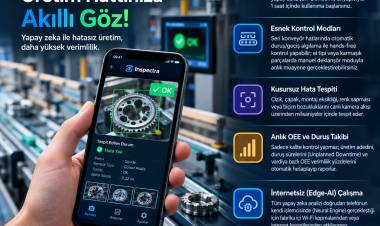
Inspectra — AI Quality Control & OEE
Edge-AI iOS app for camera-based visual quality inspection.
ViewHow we work
Free intro call
We clarify needs, existing systems and goals together.
Quote & roadmap
Scope, technology, timeline and budget within 24 hours.
Staged development
Weekly demos and a live test environment.
Launch & support
Go-live, training and ongoing maintenance.
Free pre-analysisThe first meeting and roadmap are completely free, with no obligation.
Staged delivery and approvalYou review each module on a test environment before we move on.
Written scope and rightsScope, delivery and source code rights are defined in the contract.
Frequently asked questions
Can speech in a noisy audio recording be made intelligible?
In most cases intelligibility can be improved by reducing noise and emphasising the speech band. Words never captured in the recording or completely buried in noise cannot be brought back; the result depends on the recording quality and is not guaranteed in advance.
Can an enhanced audio recording be used in court?
The processed recording and a report describing the processing can be submitted, which is why preserving the original and documenting the steps matters. Under Turkish law the court assesses the evidence; procedures in other countries differ and should be clarified with your lawyer.
Will my original audio file be changed?
No. The SHA-256 hash of the original file is recorded, the file is stored unchanged and all processing is done on a copy. The enhanced version is delivered as a separate file.
Which recording formats do you work with?
I can work with phone recordings, voice messages, the audio track of video files and common audio formats. Where possible, bring the original file from the device that made the recording rather than a copy re-sent through a messaging app, as this gives better results.
Do you produce transcripts from audio recordings?
Yes, I prepare a time-stamped transcript on request. Unintelligible passages are not filled in by guesswork; they are clearly marked.
Do you use AI for audio enhancement?
For evidential work I do not use methods that could generate sound not present in the recording. I work with documented, reproducible filtering processes.